After a stroke, the brain doesn’t simply stop learning. It adapts. Neurons reroute. New connections form in areas that weren’t previously responsible for a given function. This process, called neuroplasticity, is the scientific foundation behind cognitive rehabilitation, and it’s why structured brain exercises are now a standard part of stroke recovery programs at leading hospitals including the Mayo Clinic and Cleveland Clinic.
Brain exercises don’t replace physical therapy or medical treatment. The evidence is clear, though: regular mental stimulation after stroke helps rebuild memory, attention, processing speed, and problem-solving ability faster than rest alone.
How Stroke Affects the Brain
A stroke occurs when blood flow to a part of the brain is interrupted, either through a blockage (ischemic stroke) or a bleed (hemorrhagic stroke). The affected brain cells die within minutes. What surrounds those cells, however, is a penumbra of neurons that are damaged but salvageable, and this is where cognitive rehabilitation does its work.
Depending on which area is affected, survivors may experience difficulty with memory, language, attention, spatial reasoning, or executive function. The American Stroke Association estimates that around 50% of stroke survivors experience some form of cognitive impairment. Recovery timelines vary widely, but the brain’s capacity to reorganise doesn’t stop at six months. Research published in Neurorehabilitation and Neural Repair shows meaningful gains are still possible years after the initial event.
Why Brain Exercises Matter for Recovery
Mental activity stimulates synaptogenesis, the formation of new synaptic connections. When you work through a puzzle, recall a sequence, or solve a logic problem, you’re forcing the brain to build and reinforce pathways. Do it repeatedly, and those pathways become more efficient.
A 2020 study in JAMA Internal Medicine found that cognitively active adults who engaged in regular puzzle-solving maintained significantly better memory and processing speed over a decade compared to those who didn’t. For stroke survivors specifically, a 2018 trial published in Topics in Stroke Rehabilitation found that structured cognitive training, including logic and number-based puzzles, improved attention and executive function scores after just eight weeks of regular practice.
The Best Brain Exercises for Stroke Recovery
Sudoku and Number Puzzles
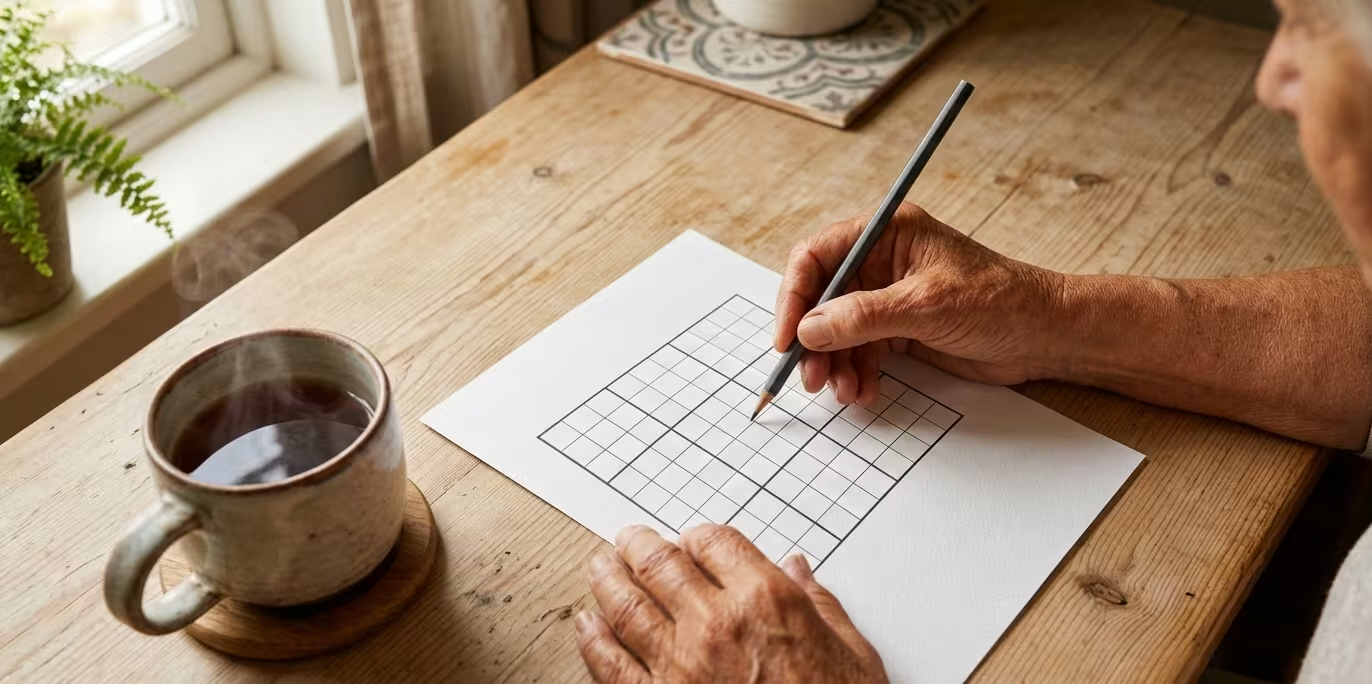
Sudoku is particularly well-suited to stroke recovery because it exercises multiple cognitive domains at once. You’re holding several constraints in working memory, scanning for patterns, making logical deductions, and self-correcting when you spot an error. That covers attention, working memory, spatial reasoning, and executive function, all in one grid. Research on how Sudoku helps your brain shows these benefits are measurable even in older adults with mild cognitive impairment.
Start with easy 4×4 or 6×6 grids if the standard 9×9 feels overwhelming. The goal isn’t speed; it’s sustained, focused engagement. Even 15 minutes a day builds meaningful neural activity. Sudoku Puzzle Hub’s free online puzzles include difficulty filters, so you can match the challenge level to where you are in recovery without frustration.
Play Free Sudoku — Anytime, Anywhere
Need a quick focus boost? Choose your level, play instantly online, or grab beautifully formatted printable PDFs — all completely free.
Suggestion: Save a few PDFs to your phone or print a bundle now — perfect for travel, screen-free time, or quick focus breaks.
Word and Language Exercises
For survivors who experienced aphasia or language difficulty, word puzzles are especially valuable. Crosswords, word searches, and naming exercises activate the language networks in the left hemisphere and strengthen the verbal retrieval pathways that stroke can disrupt.
Try naming objects in a room, describing a photograph out loud, or reading aloud for 10 minutes daily. These exercises seem simple, but the repetition and retrieval practice create measurable improvements in language fluency over weeks.
Memory Training
Working memory, the ability to hold and manipulate information in the short term, is frequently affected by stroke. Simple memory exercises include studying a short list of words then writing them from memory, recalling the sequence of steps in a task you completed earlier, or playing classic card-matching memory games.
Spaced repetition is particularly effective. Rather than drilling the same information repeatedly in one session, spread practice across days. The interval between retrieval attempts is where consolidation happens. A broader look at brain exercises for memory and concentration covers additional techniques that complement the stroke-specific work described here.
Visual-Spatial Exercises
Strokes affecting the right hemisphere often impair spatial awareness and visual processing. Jigsaw puzzles, drawing from observation, and map-reading tasks directly target these networks. Research from the University of Edinburgh found that regular engagement with visually demanding puzzles was associated with better preserved spatial cognition in older adults, findings that translate directly to rehabilitation contexts.
Dual-Task Training
One of the most effective, and most underused, rehabilitation strategies is dual-task training: doing two things at once. Walk and count backwards from 100 in threes. Listen to an audiobook while folding laundry. These tasks force the brain to allocate attention across two demands simultaneously, which directly rebuilds the executive control networks that stroke frequently disrupts.
Building a Practical Daily Routine
Consistency matters more than intensity. A 20-minute daily practice beats a two-hour session twice a week. Rehabilitation occupational therapists often suggest anchoring each exercise to an existing habit so it actually sticks:
- Morning: A Sudoku or crossword with coffee. Routine-anchoring is one of the strongest predictors of long-term compliance.
- Midday: A quick memory exercise, like recalling what you did that morning in sequence.
- Evening: A language or reading activity, which is particularly valuable for aphasia recovery.
Track your progress. Note the difficulty level you’re working at each week. Watching yourself move from a 4×4 Sudoku to a 9×9, or from a 5-minute session to 20 minutes of focused effort, is both motivating and a real measure of cognitive improvement. If you want a structured path to follow, the Sudoku solving techniques guide walks through difficulty levels progressively, which maps well onto a cognitive rehab progression.
The Role of Emotion and Motivation
Depression affects up to 30% of stroke survivors, according to the American Heart Association, and it directly suppresses cognitive plasticity. Choose exercises that feel rewarding rather than frustrating. If Sudoku feels too hard right now, try a word game. If both feel difficult, start with a simple card game or a guided drawing exercise.
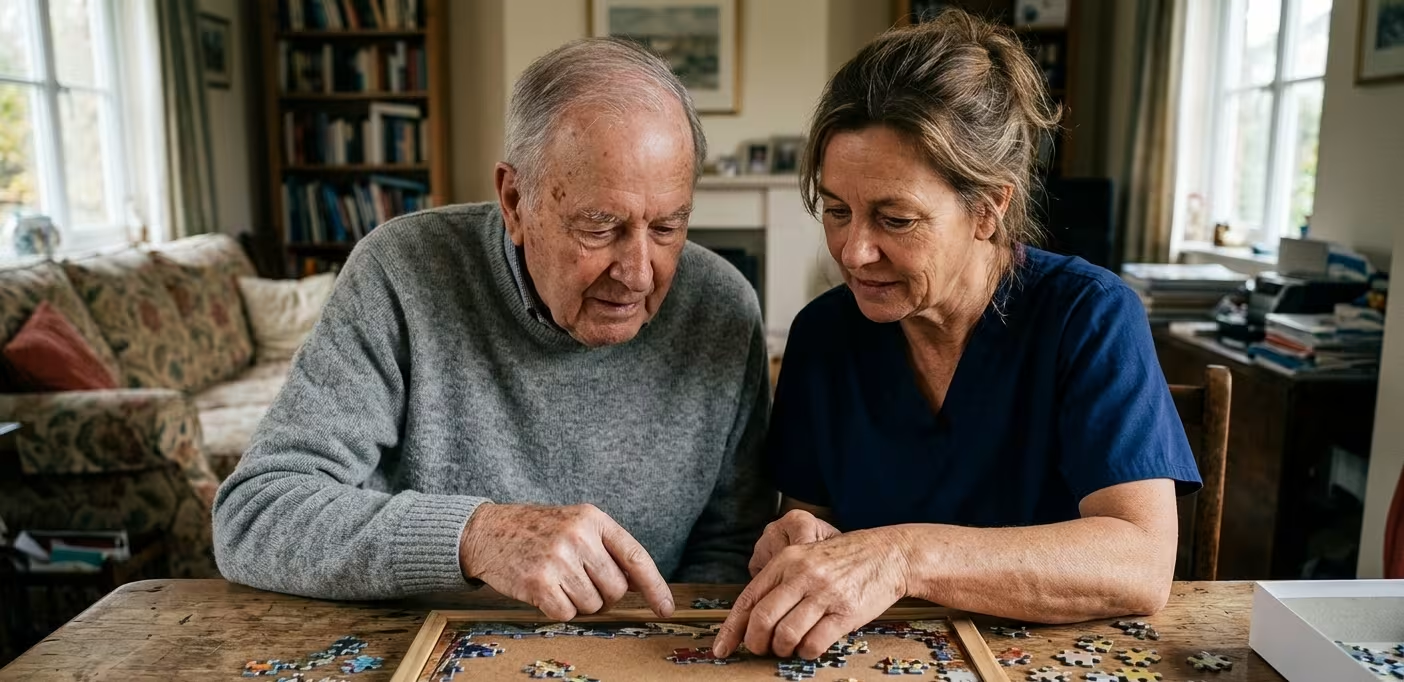
Social engagement also matters. Cognitive exercises done with a family member or caregiver: playing a game together, solving a puzzle side by side, combine cognitive stimulation with emotional connection. Research consistently links that combination to better recovery outcomes.
What to Discuss with Your Care Team
Brain exercises work best alongside professional cognitive rehabilitation, not instead of it. Neuropsychologists and occupational therapists can assess exactly which cognitive domains were affected and tailor exercises accordingly. If structured cognitive therapy isn’t part of your current recovery plan, it’s worth asking your neurologist or stroke care team about a referral.
Many hospitals now offer telehealth cognitive rehabilitation programs. The American Stroke Association’s stroke support groups, available at strokeassociation.org, also connect survivors and caregivers with community resources and structured activity programs.
Frequently Asked Questions
Can brain exercises really help stroke recovery?
Yes. Research consistently shows that structured cognitive exercises stimulate neuroplasticity, the brain’s ability to form new connections after injury. Studies published in Neurorehabilitation and Neural Repair and Topics in Stroke Rehabilitation found that regular mental training improved memory, attention, and executive function in stroke survivors compared to those who didn’t engage in cognitive activity.
How soon after a stroke can you start brain exercises?
Many rehabilitation programs begin cognitive exercises within days of a stroke, once the patient is medically stable. The early weeks are a critical window for neuroplasticity. Start gently with short sessions and low-difficulty puzzles, then increase gradually. Always follow your care team’s guidance on timing and intensity.
Is Sudoku good for stroke recovery?
Sudoku is an excellent choice for stroke recovery because it simultaneously exercises working memory, attention, logical reasoning, and spatial pattern recognition. It’s adjustable in difficulty too. Starting with simpler 4×4 or 6×6 grids and progressing to standard 9×9 puzzles lets survivors build cognitive stamina gradually without becoming discouraged.
How long does cognitive recovery after stroke take?
Recovery timelines vary significantly depending on stroke severity and location. Most rapid improvement occurs in the first three to six months, but meaningful cognitive gains are still possible years later. Consistent engagement with rehabilitative exercises is one of the strongest predictors of long-term improvement.
What part of the brain controls cognitive function after a stroke?
It depends on where the stroke occurred. The left hemisphere primarily manages language and verbal memory; the right hemisphere handles spatial awareness and visual processing. The frontal lobes govern executive function, planning, and attention. Strokes affecting any of these areas produce specific cognitive deficits, which is why targeted rehabilitation is more effective than generic mental activity.
Are there apps designed for stroke cognitive rehabilitation?
Yes. Apps like Constant Therapy, BrainHQ, SudokuPuzzleHub and Lumosity offer structured cognitive training programs used by occupational therapists in rehabilitation settings. For puzzle-based practice, Sudoku Puzzle Hub provides free online puzzles across multiple difficulty levels that can be used as a daily cognitive exercise.
Should stroke survivors do brain exercises every day?
Daily practice produces better outcomes than infrequent longer sessions. Even 15-20 minutes of focused cognitive activity each day is enough to drive meaningful neuroplastic change over weeks and months. Anchoring a brain exercise to an existing daily habit, like morning coffee, significantly improves long-term consistency.
Can caregivers do brain exercises alongside stroke survivors?
Absolutely, and research suggests doing so improves outcomes. Social engagement combined with cognitive activity has a compounding effect on recovery. Shared puzzles, card games, or watching a quiz show together and answering questions out loud all count. It also makes the exercise feel less like therapy and more like connection.