
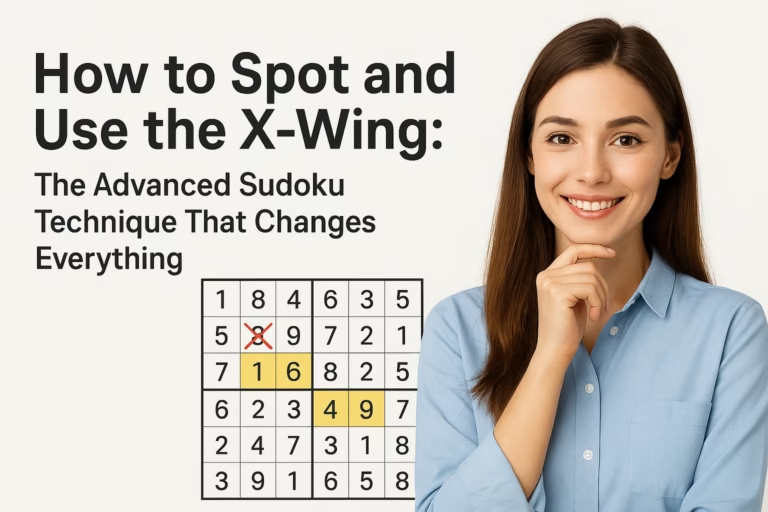
Have you ever hit “the wall” in a difficult Sudoku puzzle?
You’ve filled in all the “Naked Singles.” You’ve scanned for “Hidden Pairs.” But you’re still stuck. The grid is a sea of “pencil marks” (candidates), and no obvious moves are left.
This is the exact moment where you transition from a beginner to an advanced solver. And the key that unlocks that next level is a technique called the X-Wing.
It might sound complex, but the logic is surprisingly simple. This 5-minute guide, complete with clear diagrams, will show you exactly what the X-Wing is, how to spot it, and how to use it to break open those “impossible” puzzles.
What is the Sudoku X-Wing?
In short, the X-Wing is a pattern of four numbers.
It gets its name because when you draw lines to connect the four cells, it often looks like the letter ‘X’.
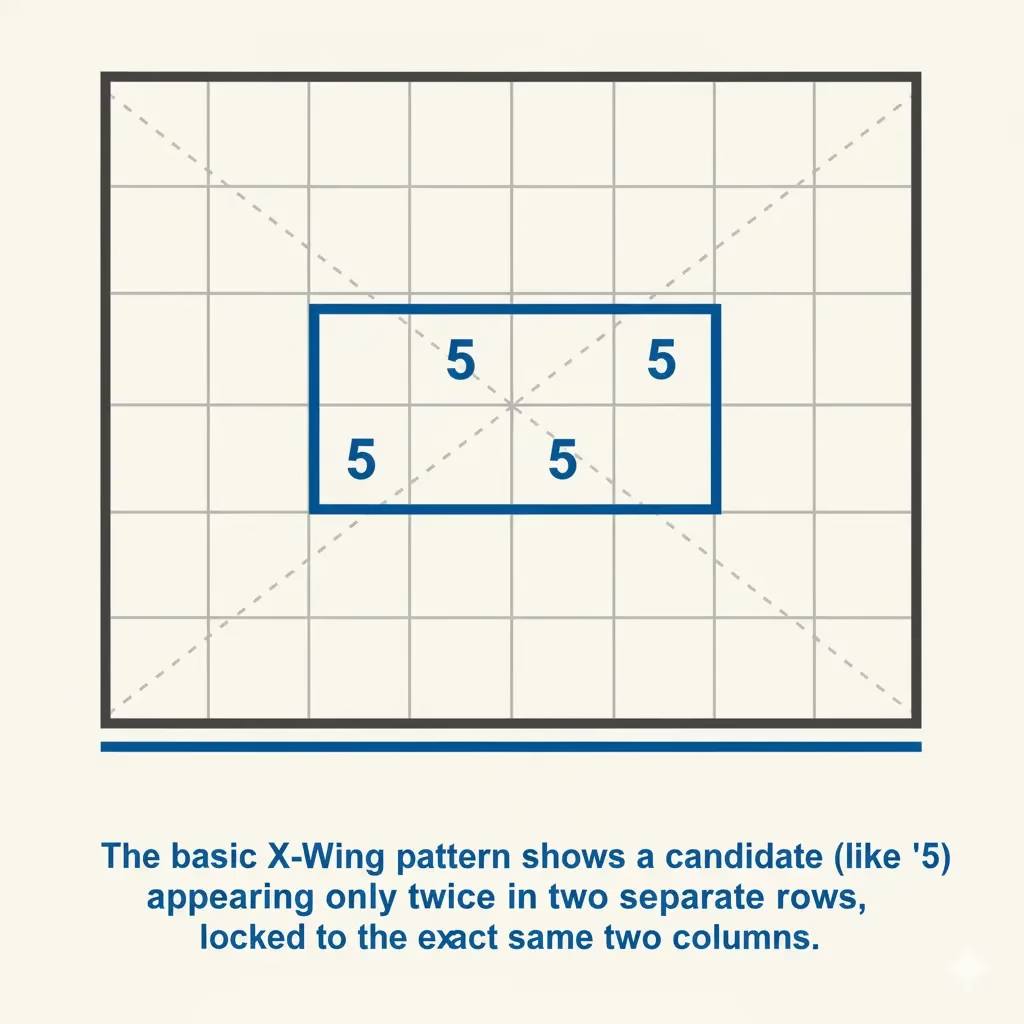
The X-Wing pattern occurs when a specific candidate (let’s say, the number ‘5’) appears in:
- Only two cells in a particular row.
- And in a second row, that same candidate appears in only two cells.
- Critically, these two pairs of cells are in the exact same columns, forming a perfect square or rectangle.
The “Aha!” Moment: Why the X-Wing Works
Here’s the logic. Look at our diagram above.
In Row 2, the ‘5’ must go in either C3 or C7. There are no other options in that row.
In Row 6, the ‘5’ must go in either C3 or C7.
Now, think about the columns.
- Case 1: If the ‘5’ for Row 2 goes in C3, then the ‘5’ for Row 6 must go in C7.
- Case 2: If the ‘5’ for Row 2 goes in C7, then the ‘5’ for Row 6 must go in C3.
Do you see the pattern? No matter what, one of those ‘5s’ will be in Column 3, and the other will be in Column 7.
This means we have locked the ‘5’ to those two rows (R2 and R6) for those two columns (C3 and C7).
Because we know the ‘5s’ for Column 3 and Column 7 are guaranteed to be in those four boxes, we can make a powerful move:
We can confidently eliminate ‘5’ as a candidate from every other cell in Column 3 and Column 7.
Play Free Sudoku — Anytime, Anywhere
Need a quick focus boost? Choose your level, play instantly online, or grab beautifully formatted printable PDFs — all completely free.
Suggestion: Save a few PDFs to your phone or print a bundle now — perfect for travel, screen-free time, or quick focus breaks.
Sudoku X-Wing Examples (Step-by-Step Tutorial)
Understanding theory is helpful, but Sudoku X-Wing examples are what truly make this technique click. Let’s break it down using clear, practical scenarios you’ll actually encounter while solving puzzles.
X-Wing Sudoku Example Using Rows
Example Scenario
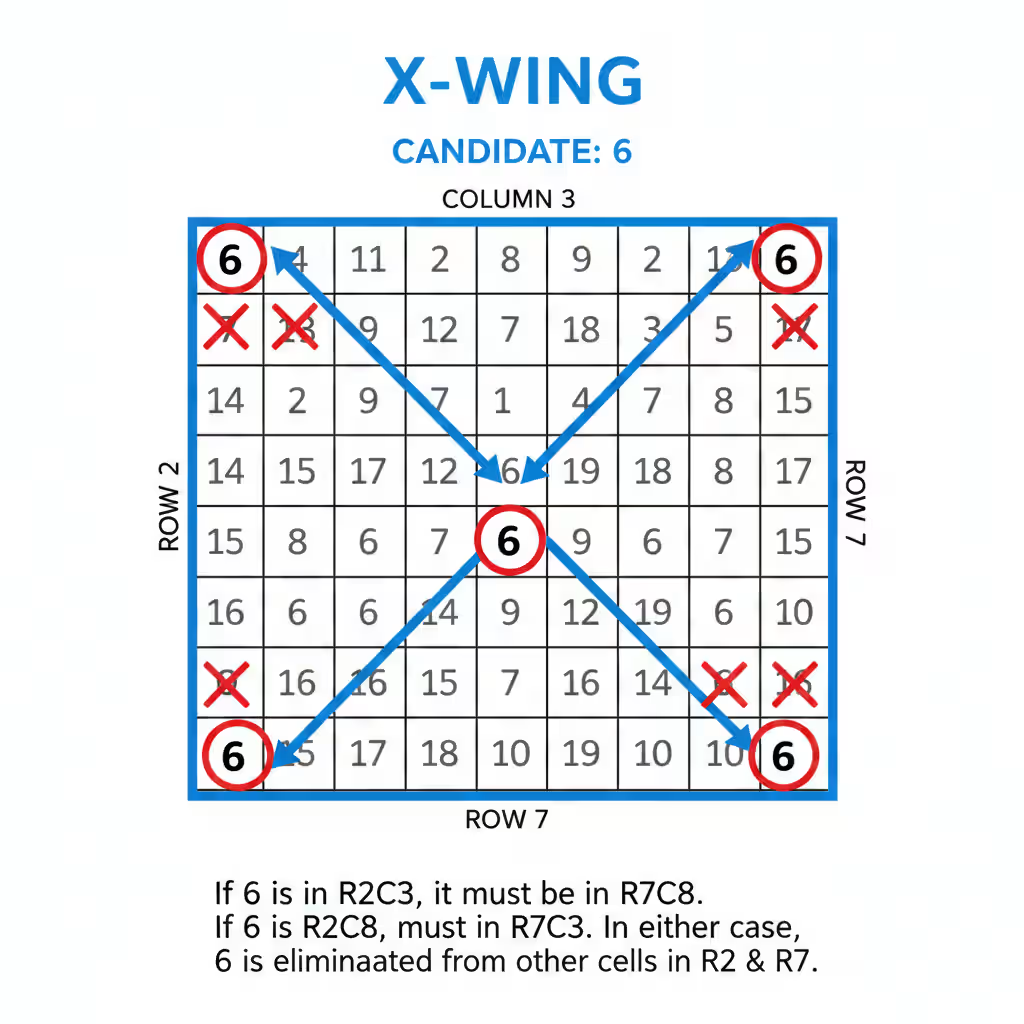
Imagine you are solving a Sudoku puzzle and focusing on candidate number 7.
- In Row 2, the number 7 can only appear in Column 4 or Column 8
- In Row 6, the number 7 can also only appear in Column 4 or Column 8
No other cells in these two rows can contain a 7.
Why This Forms an X-Wing
Because:
- The same candidate (7)
- Appears in exactly two cells
- Across two different rows
- And those cells align in the same two columns
These four cells form the corners of a rectangle — the classic X-Wing pattern.
What You Can Do Next
Once this pattern is confirmed:
- The number 7 must be placed in Columns 4 and 8 within Rows 2 and 6
- Therefore, you can eliminate candidate 7 from all other cells in Columns 4 and 8
This elimination often unlocks new placements immediately.
This is a classic Sudoku X-Wing example using rows.
Want to Level Up Your Sudoku Skills?
Whether you’re just starting out or sharpening your strategy, these clear, beginner-friendly guides will help you solve Sudoku with confidence.
⭐ Pro Insight: Just 10 minutes a day with the right techniques can dramatically improve your solving speed and confidence.
X-Wing Sudoku Example Using Columns
Example Scenario
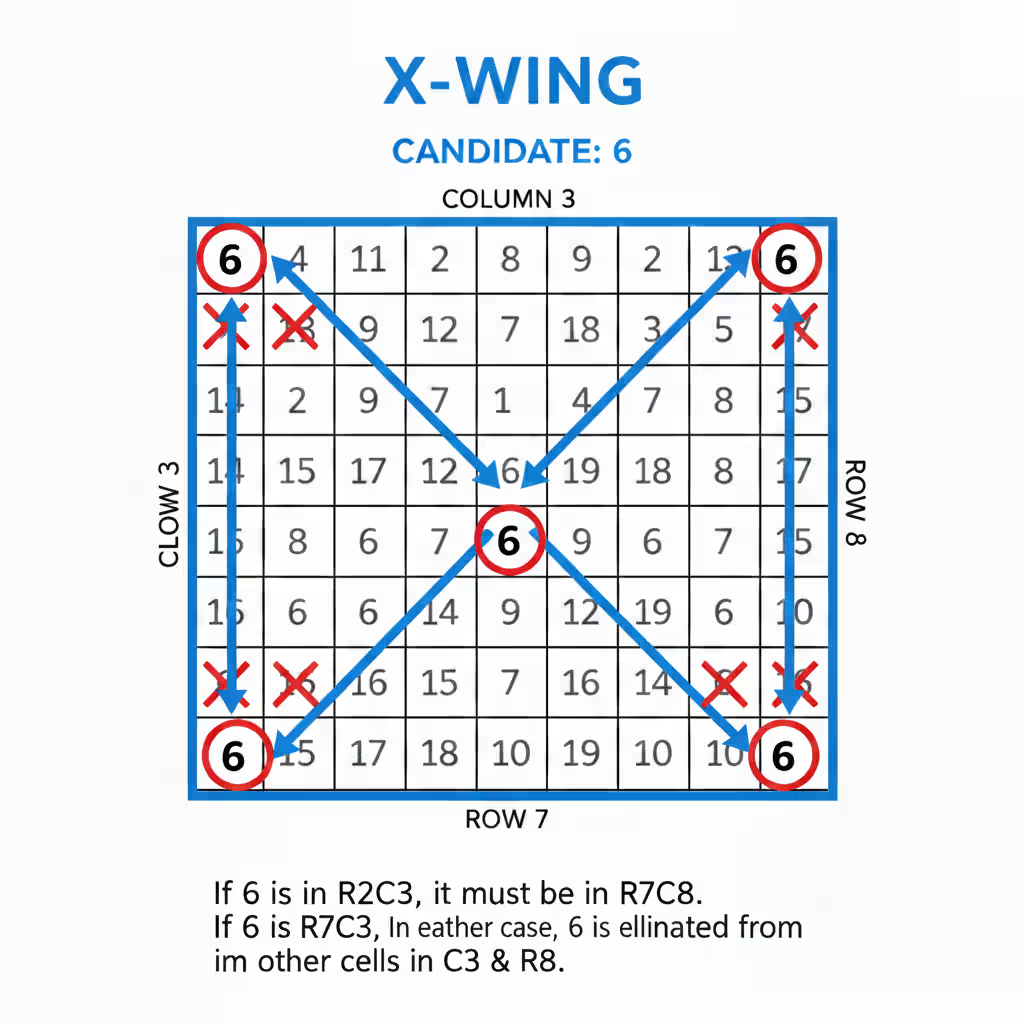
Now let’s reverse the logic and look at columns instead of rows, focusing on candidate number 3.
- In Column 1, the number 3 appears only in Row 4 and Row 9
- In Column 7, the number 3 also appears only in Row 4 and Row 9
Again, no other cells in these columns allow a 3.
Why This Is Still an X-Wing
Even though we’re starting with columns:
- The candidate appears twice per column
- The rows line up perfectly
- The four cells form a rectangle
This is still a valid X-Wing Sudoku pattern.
Elimination Step
You can now:
- Remove candidate 3 from all other cells in Rows 4 and 9
- Keep it only in Columns 1 and 7 for those rows
This is one of the most common X-Wing Sudoku examples using columns.
Samurai Sudoku Rules & Complete Guide: How to Play, Tips & Strategies
How to Use the X-Wing: A Step-by-Step Example
Let’s walk through it on a real puzzle.
Step 1: Scan for “Paired Candidates”
Look at your grid, with all candidates (pencil marks) filled in. Scan one row at a time. Are there any rows where a number appears only twice?
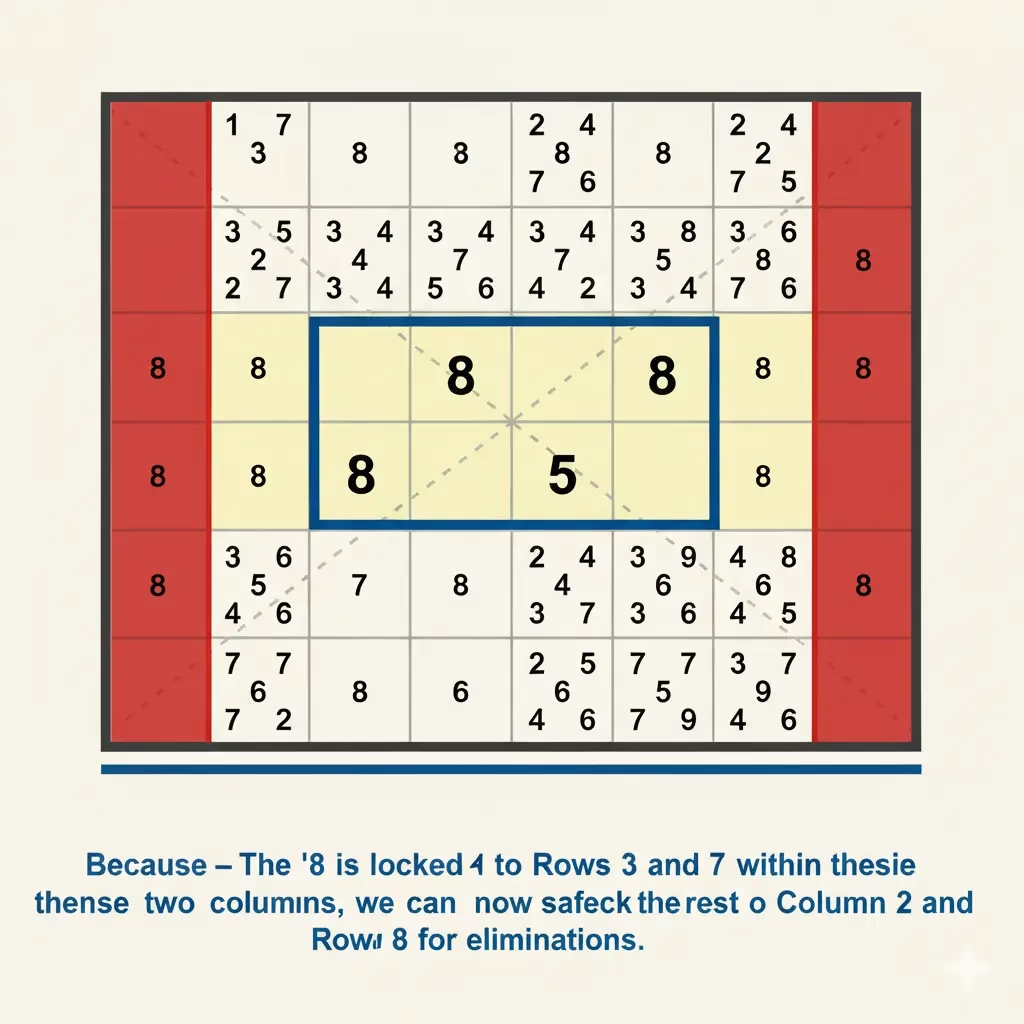
In our example, we scan Row 3 and find that the number ‘8’ appears only two times: in C2 and C8.
Step 2: Find the “Partner” Row
Now, keep scanning. Do you see another row where the ‘8’ also appears only twice?
Yes! In Row 7, the ‘8’ appears only in C2 and C8.
Step 3: Check for Alignment
This is the magic.
- Row 3’s ‘8s’ are in Column 2 and Column 8.
- Row 7’s ‘8s’ are also in Column 2 and Column 8.
They are aligned perfectly. We have an X-Wing.
Step 4: The Elimination (The Payoff!)
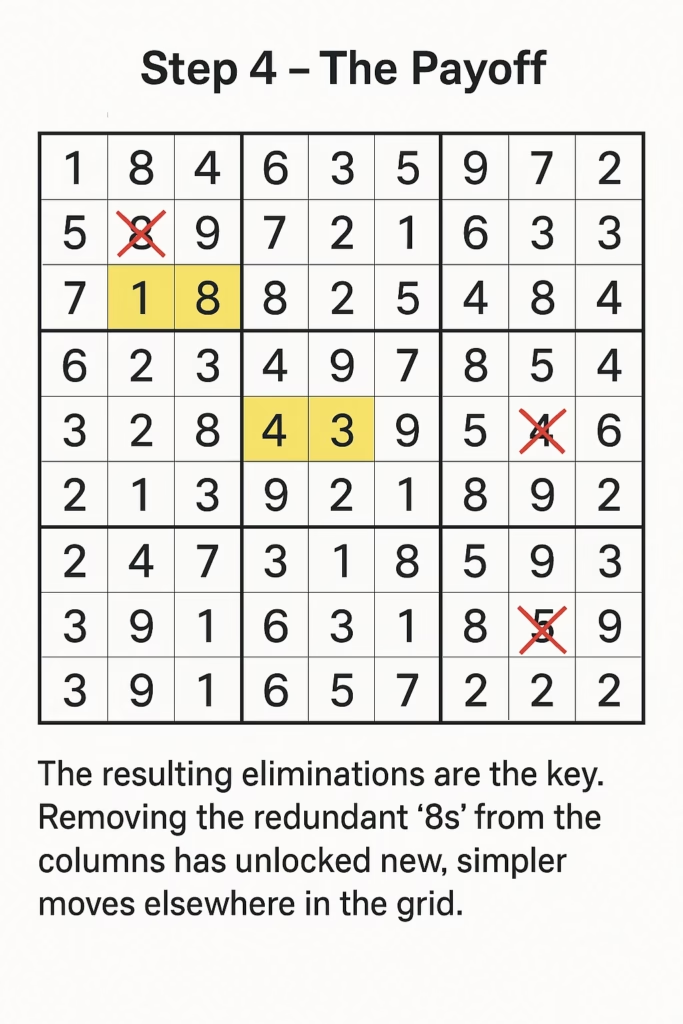
We now know that for Column 2 and Column 8, the ‘8’ must live in Row 3 or Row 7.
This allows us to look at Column 2 and Column 8 and eliminate ‘8’ from every other cell in those columns.
What Happens Next?
Look at Diagram 4 again. By eliminating the ‘8’ from R5C2, we might have left only one candidate in that cell (a “Naked Single”). By eliminating the ‘8’ from R1C8, we may have unlocked another move.
This is the power of the X-Wing. It doesn’t solve the puzzle outright, but it “breaks the dam” and triggers a cascade of simpler moves that were impossible just a minute ago.
A Quick Note: Column X-Wings
This exact same logic works for columns, too! If you find a candidate that appears only twice in Column A, and twice in Column B, and they are aligned in the same two rows, you can eliminate that candidate from the rest of those two rows.
Key Rule to Remember (Very Important)
An X-Wing works only when a candidate appears exactly twice in each of two rows or two columns.
If a row or column has three or more possible positions, it is not an X-Wing.
This rule alone prevents most beginner mistakes.
When to Look for X-Wing Patterns (Sudoku Tips)
The Sudoku X-Wing technique is most useful when:
- Easy techniques (singles, pairs) stop working
- The puzzle feels “stuck” but not unsolvable
- You notice repeated candidate positions lining up across rows or columns
Tip: X-Wing often appears before even harder techniques like Swordfish.
Why These Examples Help You Master X-Wing
These X-Wing Sudoku examples show:
- How to identify the pattern
- Why eliminations are valid
- How one logical step affects the whole grid
With practice, spotting X-Wings becomes almost automatic.
You’ve Mastered the X-Wing
Congratulations! You’ve just learned one of the most powerful and satisfying techniques in Sudoku. It may seem tricky at first, but after you find your first one, you’ll start seeing them everywhere.
The X-Wing is just the beginning. It’s part of a family of “fish” patterns (like the Swordfish and Jellyfish) that advanced solvers use.
Your Next Step:
- Practice: The best way to learn is by doing. Fire up one of our Daily Difficult Puzzles and try to find one.
- Learn More: Ready for the next level? Read our Top 10 Solving Techniques Every Hard Sudoku Player Must Know
- Share: Did this guide help you? Share it with a friend or in your favorite puzzle community!
Frequently Asked Questions About the Sudoku X-Wing Technique
What is the X-Wing technique in Sudoku?
The Sudoku X-Wing technique is an advanced logical method used to eliminate candidates. It occurs when a number appears in exactly two cells in two different rows (or columns), aligned in the same columns (or rows), forming a rectangle. This pattern allows you to eliminate that number from other cells in the shared rows or columns.
Is the X-Wing technique considered advanced?
Yes. The X-Wing Sudoku technique is considered an advanced strategy because it requires tracking candidate positions across multiple rows or columns. It is usually applied after basic techniques like naked singles and pairs stop working.
How do you spot an X-Wing in Sudoku?
To spot an X-Wing:
- Choose a candidate number (for example, 5).
- Scan rows (or columns) where that number appears exactly twice.
- Check if two rows share the same two columns for that candidate.
- If they do, you’ve found an X-Wing Sudoku pattern.
Practice makes recognition much faster.
Can beginners use the X-Wing technique?
Beginners can learn the X-Wing Sudoku technique, but it’s best attempted after mastering basic Sudoku rules and simpler elimination methods. New players should first become comfortable with candidate notes before trying X-Wing patterns.
Are X-Wing and Swordfish related?
Yes. X-Wing and Swordfish are related Sudoku techniques.
- X-Wing involves 2 rows and 2 columns
- Swordfish expands the same logic to 3 rows and 3 columns
Understanding X-Wing makes learning Swordfish much easier later.
Why isn’t my X-Wing working?
Common reasons an X-Wing fails:
- One row or column has more than two candidate positions
- The candidate positions don’t align perfectly
- A candidate was missed or incorrectly eliminated earlier
For an X-Wing to work, the pattern must be exact and clean.