

Why ADHD Brains Click with Sudoku
If you’re an adult with ADHD, you already know what it feels like to have a brain that can sprint but hates the slow jog. One moment you’re fully tuned in, the next moment your attention has wandered off to a completely unrelated idea (or three). This isn’t laziness — it’s the hallmark of ADHD’s executive-function challenges, including focus drift, weak working memory, and boredom intolerance. (ADD.org)
That’s why many adults with ADHD look for tools beyond medication — activities that are structured, calming, and naturally rewarding.
Sudoku Puzzle Hub offers just enough challenge to engage the ADHD brain without overwhelming it. Every small “Aha!” moment (like finding the right number for a row) creates a tiny shot of dopamine — the neurotransmitter ADHD brains often crave for motivation and reinforcement. (Healthline)
It’s simple, predictable, low-friction — and surprisingly powerful.
What ADHD Does to Focus and Working Memory
ADHD affects executive functions: the brain’s command center for attention, working memory, inhibition, and cognitive flexibility. When these systems struggle, you may experience:
- Forgetting steps while working
- Starting tasks but drifting away
- Difficulty resisting impulses
- Feeling overwhelmed by multi-step thinking
These challenges are well-documented in ADHD research. (ADD.org)
Here’s where Sudoku becomes more than a casual game.
Sudoku trains the same cognitive systems that ADHD makes harder:
- Working memory: tracking possibilities in rows, columns, and boxes
- Inhibition: resisting impulsive guesses that break puzzle logic
- Cognitive shifting: moving your focus between different parts of the grid
Neuroscience studies show that Sudoku-like tasks activate the prefrontal cortex — the region responsible for exactly these skills. (NCBI Neurology Study)
Also Read: How to Play Sudoku – Sudoku Beginner Guide
The Science: How Puzzles and Sudoku Help ADHD
1. Sudoku Activates the Attention and Planning Centers of the Brain
Functional MRI and cognitive-task research show logic puzzles involve sustained attention, working memory, and rule-based reasoning, all of which rely on prefrontal cortex activation. (NCBI)
2. Brain Games Can Improve Specific Executive Functions
Some studies show small benefits in working memory and attentional control when adults consistently engage in structured puzzles. (PsychCentral)
Clarifying expectations:
Experts caution that while puzzle-based training sharpens the skills used during the game, they don’t “cure” ADHD. Improvements are often task-specific, meaning Sudoku makes you better at Sudoku-like thinking, not necessarily all life tasks. (UW Medicine)
Still, for ADHD adults looking to strengthen attention in a low-pressure way, Sudoku is a valuable supportive tool.
Also Read: How Sudoku Helps Your Brain | Best Brain Games / Brain Websites
Choosing the Right Difficulty if You Have ADHD
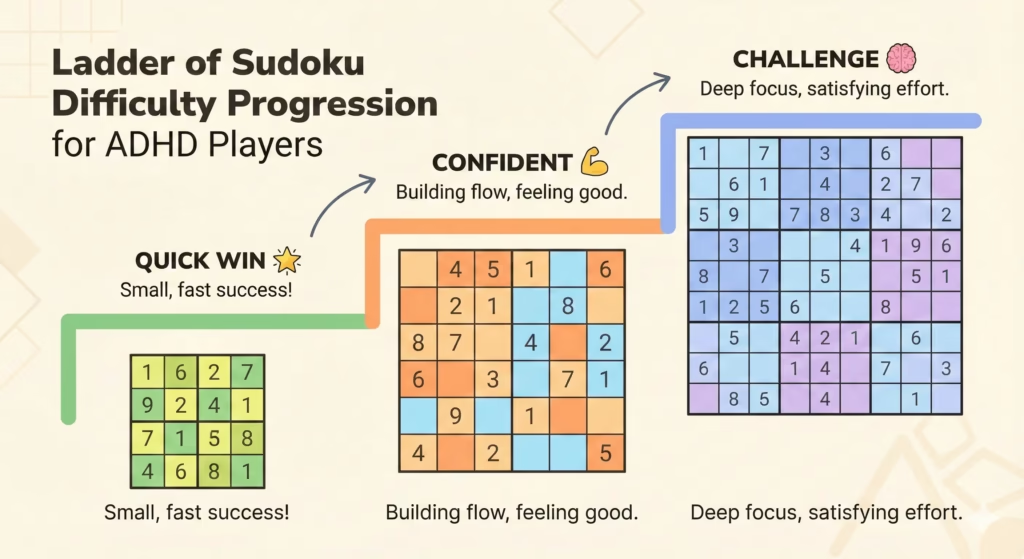
One common ADHD trap is jumping straight to “Hard” puzzles… then feeling overwhelmed and quitting. Instead:
- Start with Very Easy puzzles
- Even 4×4 or beginner 9×9 grids build confidence and give fast wins.
- Progress only when puzzles feel comfortable
- Easy → Medium → Hard. …but only when your completion rate is consistent, and stress stays low.
- Ideal session length
- 10–15 minutes, 1–2 puzzles a day, especially for beginners.
8 ADHD-Friendly Sudoku Strategies That Actually Work
1. Use Color-Coded Pencil Marks: Visual cues reduce working-memory load and help prevent mistakes.
2. Short Timed Bursts + Breaks, ADHD attention thrives on cycles, use:
- 10–15 minutes focus
- 3–5 minutes break
to prevent hyperfocus burnout.
3. Try “Mindful Sudoku”: Slow breathing + scanning the grid can reduce stress and increase clarity.
4. Make It a Game: ADHD brains love reward loops.
Track:
- Streaks
- Solve times
- Personal bests
for natural motivation dopamine hits.
5. Track Your Progress: Seeing improvement reinforces consistency — a challenge for many ADHD adults.
6. Pair Sudoku With Movement: Research strongly supports physical movement for improving ADHD cognition. Play a puzzle → take a walk → play another.
7. Use Hints or Error Highlighting — But Sparingly: These features teach patterns early on but should slowly be phased out.
8. Create Accountability: Share puzzles with a friend or partner, or compare times — small commitments boost follow-through.
Best Ways to Use Sudoku Daily Without Overwhelm
Here’s a simple, ADHD-friendly routine:
- Morning (5–10 min): Warm up your brain with an easy puzzle.
- Lunch break (1 puzzle): Use Sudoku as a mental reset.
- Evening (10 min): A calming puzzle before scrolling or TV.
- Know when to stop: Pause if:
- you’re frustrated,
- making repeated errors, or
- becoming perfectionistic.
A reset can prevent negative associations with the habit.
How Sudoku Fits With ADHD Treatment Plans
Sudoku is a supportive tool, not a replacement for:
- ADHD medication
- Cognitive Behavioral Therapy (CBT)
- ADHD coaching
- Sleep optimization
- Exercise routines
Always discuss cognitive training choices with your clinician or therapist, especially if you’re adjusting any part of your ADHD management plan.
Getting Started on Sudoku Puzzle Hub
If you’re ready to begin building focus through Sudoku, start with the most ADHD-friendly beginner puzzles:
- Start with an Easy ADHD‑Friendly Puzzle Now – Play Beginner Sudoku Online
- Download Printable Easy Sudoku Packs
🎯 Try the 7-Day ADHD Sudoku Focus Challenge
A simple daily routine + short puzzles to boost attention and build a lasting focus habit.